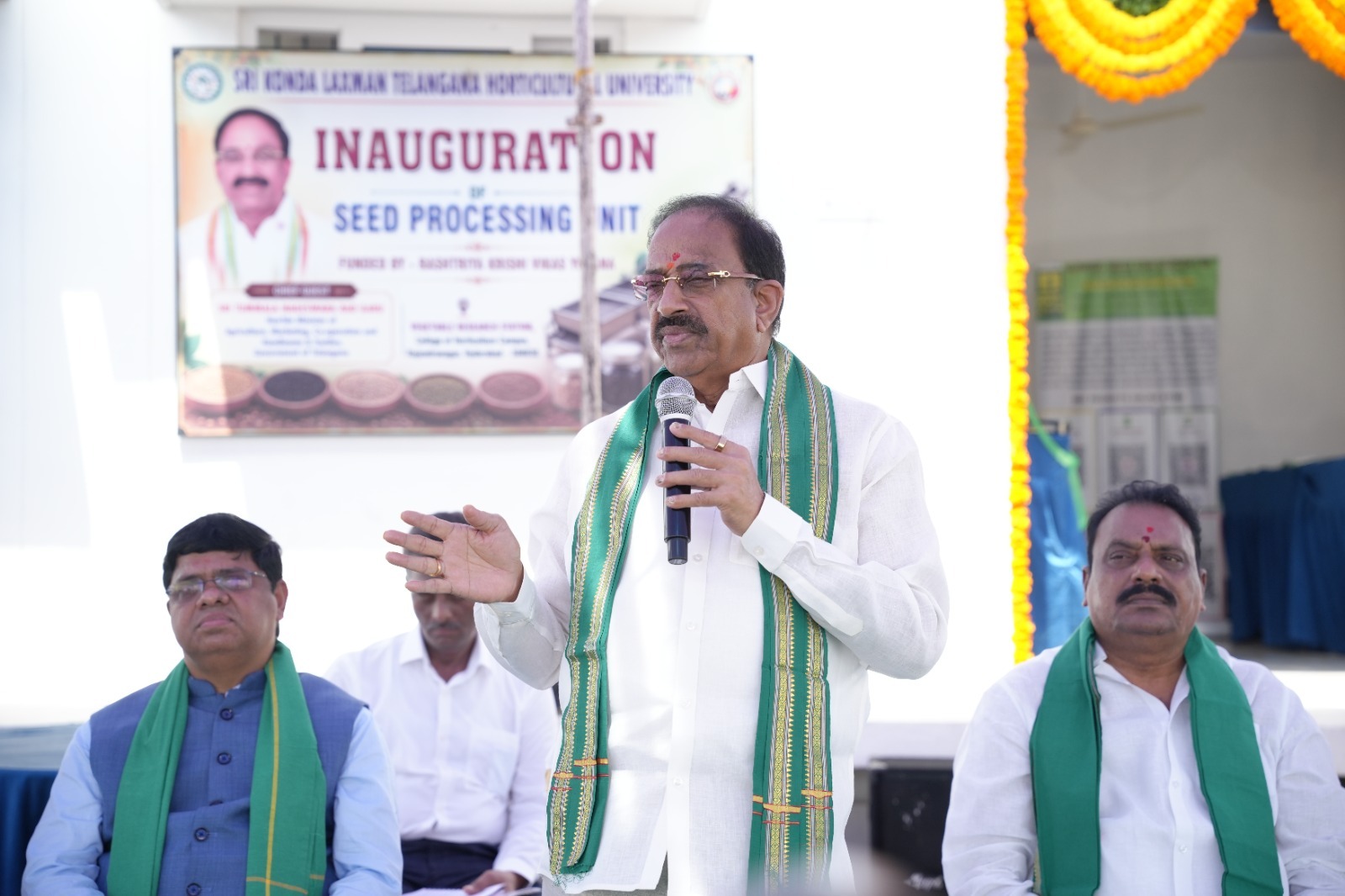
Minister Tummala Unveils Horticultural Research Complex, Stresses Farmer-Focused Innovation
Hyderabad, Aug. 18: Telangana Agriculture, Marketing, Cooperation, Handlooms and Textiles Minister Tummala Nageswara Rao on Tuesday said horticultural research must be aligned with farmers’ needs and its outcomes should reach them through modern digital platforms. Laying the foundation stone for the Horticultural Research Complex at Sri Konda Laxman Telangana Horticultural University, he described the facility as a major step toward strengthening the state’s horticulture sector.
The Minister said research should move beyond laboratories and directly benefit farmers through videos, social media, YouTube and field demonstrations. He noted that while horticultural crops occupy only 6% of Telangana’s cultivated area, they contribute 26% of the state’s agricultural gross value, estimated at ₹30,346 crore.
Expressing concern over the state’s 70% shortfall in vegetable production, Tummala called for demonstration plots in every district and mandal to encourage cultivation of high-demand vegetables and horticultural crops. He stressed that research should primarily address the needs of small and marginal farmers, who make up nearly 90% of the state’s farming community, by developing affordable technologies and low-cost cultivation practices.
He also encouraged innovation among rural youth, saying locally developed farm tools and machinery should be identified and promoted. Reaffirming the government’s commitment to expanding oil palm cultivation to 10 lakh acres within the next three to four years, he said intercrops such as cocoa and mace could further enhance farmers’ incomes.
The Minister emphasized the need to reduce post-harvest losses, promote balanced fertilizer use, integrated pest management, and water-efficient irrigation systems such as drip and sprinkler irrigation. He urged universities and research institutions to expand their activities to district-level research and training centres, adding that coordinated efforts between research institutions and government departments would help translate scientific innovations into practical benefits for farmers.
